
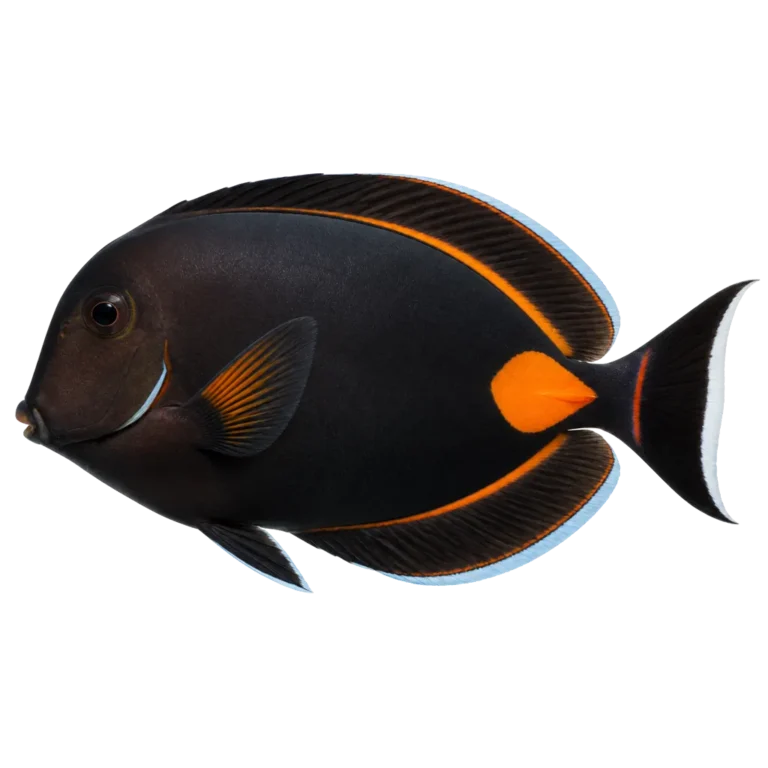
Achilles Tang Hybrid
Summary
Acanthurus achilles × Acanthurus nigricans, sold as the Achilles Tang Hybrid, is a fast-moving surgeonfish whose hybrid appearance does not make its husbandry predictable or easier than its parent species. Treat it as a demanding, constantly grazing Acanthurus: it needs room to patrol, strong oxygen-rich circulation, and dependable access to marine algae.
Its restless open-water swimming and preference for forceful flow reflect the exposed, surge-influenced habitat associated with the Achilles parent. A fish that repeatedly paces the glass, wedges itself into a corner, or breathes heavily near the surface is not simply being active; it can be signalling crowding, social pressure, or inadequate oxygenation.
Care
Build the aquascape around uninterrupted swimming lanes rather than a dense wall of rock. Keep rock structures secure and concentrated toward the back or ends of the aquarium, while leaving grazing surfaces and routes through the scape; this lets the fish retreat into cover when startled without turning every lap into a territorial confrontation.
Provide vigorous, broad water movement with strong surface agitation and areas where the fish can choose a less forceful current. This hybrid is poorly suited to a quiet, low-oxygen display: persistent rapid gill movement, hovering in high-flow outlets, or reduced activity warrants an immediate check of oxygen exchange, temperature, and equipment performance.
Use a mature system with reliable nutrient export and enough natural grazing between feedings. An Achilles-lineage tang can decline quickly when confined, underfed, or repeatedly stressed, often becoming withdrawn, darkened, thin through the body, or unusually reactive toward tankmates.
Feeding
Offer marine algae as the daily staple, using nori or other dried seaweed, spirulina-based foods, and quality herbivore pellets. Feed several small portions across the day rather than one large meal, and do not expect incidental film algae in a clean reef aquarium to meet its needs.
Place algae clips where the fish can feed without being trapped by dominant tankmates, and add a second feeding point when other grazers are present. If it hangs back at the clip, loses fullness behind the head, or develops a visibly pinched belly, address feeding access before assuming it is merely a shy individual.
Supplement the plant-based diet with varied marine foods as appropriate, but avoid making rich meaty foods the main diet. A high-fibre algae diet supports continuous grazing behaviour and reduces the risk of gradual weight loss despite apparent enthusiasm at feeding time.
Compatibility
Keep this hybrid as the only Achilles-type or closely related Acanthurus surgeonfish in most home aquariums. Similar-bodied tangs are the most likely targets for chasing, lateral displays, tail-slashing, and prolonged food-clip disputes; a hybrid should not be assumed to be more tolerant than either parent.
Choose established, non-fin-nipping fish that do not dominate algae stations or claim the same open swimming routes. Avoid adding it to a tank already ruled by assertive surgeonfish, large angelfish, triggers, or other fish likely to turn feeding and cruising space into constant competition.
When the community is otherwise suitable, introduce this fish after more peaceable residents and avoid adding another tang later. It may initially appear tolerant, then begin defending its route or feeding area once it has settled and gained condition. It is generally compatible with reef corals, but its sharp tail spines make close netting and hand-catching risky for both the fish and the aquarist.
Good to know
This is a high-risk fish for marine ich and velvet, especially after shipping, social stress, or a disruption in feeding. New white spots, flashing, excess mucus, clamped fins, rapid breathing, or a sudden refusal of food should be treated as urgent warning signs rather than something to watch for several days.
A hybrid’s colour pattern may be unusual, but its care requirements should be based on its parentage rather than appearance. Do not purchase one on the assumption that hybrid vigour will make it hardier; individual responses to acclimation, parasites, and aggression can vary substantially.
Use a secure cover. A startled surgeonfish can launch from the aquarium during chasing, netting, or abrupt changes in lighting, and the caudal spines can become tangled in nets or injure the fish if it is handled roughly.