
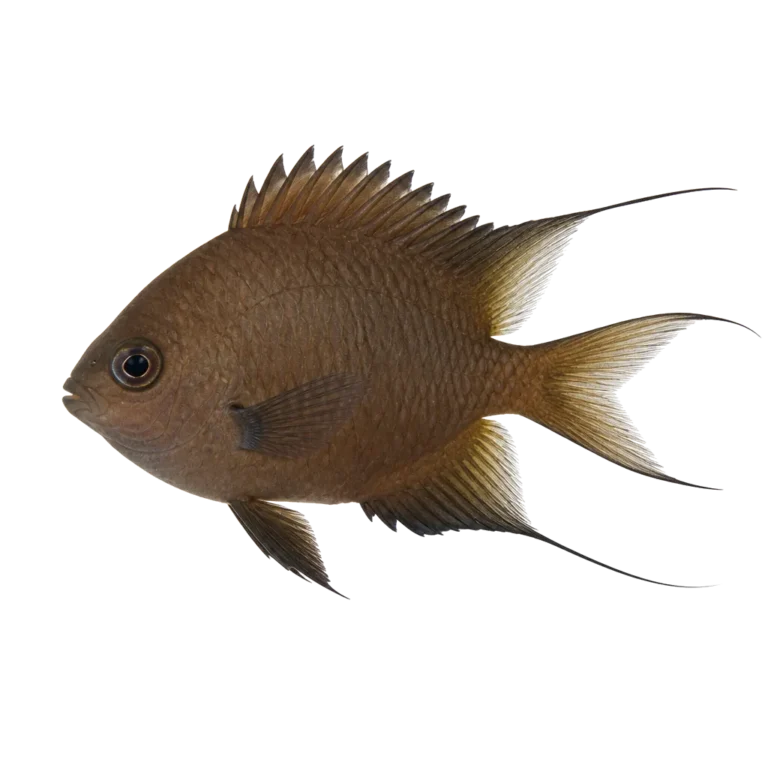
Brown Demoiselle
Summary
The Brown Demoiselle, Neopomacentrus filamentosus, is a plankton-picking damselfish that spends much of the day hovering and making short darts through the upper water column. Its tendency to remain out in the open makes it a better fit for a calm community with visible swimming space than for a rock-packed tank dominated by boisterous fish.
It is generally less confrontational than many damsels, but it is still easily displaced. Repeated hiding, feeding only from cover, or a fish that stays pressed into the rockwork usually points to intimidation rather than normal shyness.
Care
Build the aquascape with open water above and between the rock structures, while retaining several quick retreats in the rockwork. This mirrors its hover-and-dart swimming style: a fish that can make short feeding excursions and immediately duck into cover is more likely to remain visible and settled.
Avoid placing it with fish that claim the same upper-water feeding lane or relentlessly patrol the rockwork. The important environmental requirement is not a special coral host, but enough uninterrupted swimming room and enough separate refuges that a subordinate fish is not forced to cross a dominant tankmate's territory to rest.
Feeding
Feed a varied mix centered on fine meaty planktonic foods, such as appropriately sized mysis, copepod-based foods, enriched brine shrimp, and finely chopped marine fare, with quality prepared foods that include plant material. It is an omnivore, but a diet made mostly of large chunks or occasional heavy feedings can leave a timid individual unable to compete.
Offer small portions repeatedly through the day and distribute them into the current so food remains available in the water column. Watch the individual fish rather than assuming the group is eating: a Brown Demoiselle that repeatedly rushes toward food but turns back as larger fish arrive needs a second, more protected feeding opportunity.
Compatibility
Keep one individual in a mixed peaceful community, or introduce a small group together only where the aquarium has substantially more open space and shelter than a single fish requires. Adding one later to an established group is more likely to leave the newcomer excluded from the preferred hovering and feeding areas.
Favour peaceful, non-predatory fish that feed without bullying, and avoid large predators, forceful planktivores, and assertive damsels. If combining it with other territorial fish, add the Brown Demoiselle before those species establish the rockwork as their own, or introduce the territorial species last.
It is reef-compatible and is not expected to bother corals or typical ornamental invertebrates. The practical exception is indirect: an overstocked, high-feeding community can make it hard for this active water-column feeder to receive enough food even when every animal is individually reef-safe.
Good to know
Do not judge its long-term place in the tank solely by a calm first week. A hierarchy can become apparent after the fish settle, with one individual repeatedly taking the open feeding position while another remains near cover; persistent chasing or a fish losing condition calls for separation rather than waiting for the group to sort itself out.
Breeding behaviour can create a small defended patch near a suitable egg-laying surface. A male may guard and fan attached eggs, so newly intensified chasing around one rock or hard surface can be territorial nest defence rather than a disease-related change in activity.