
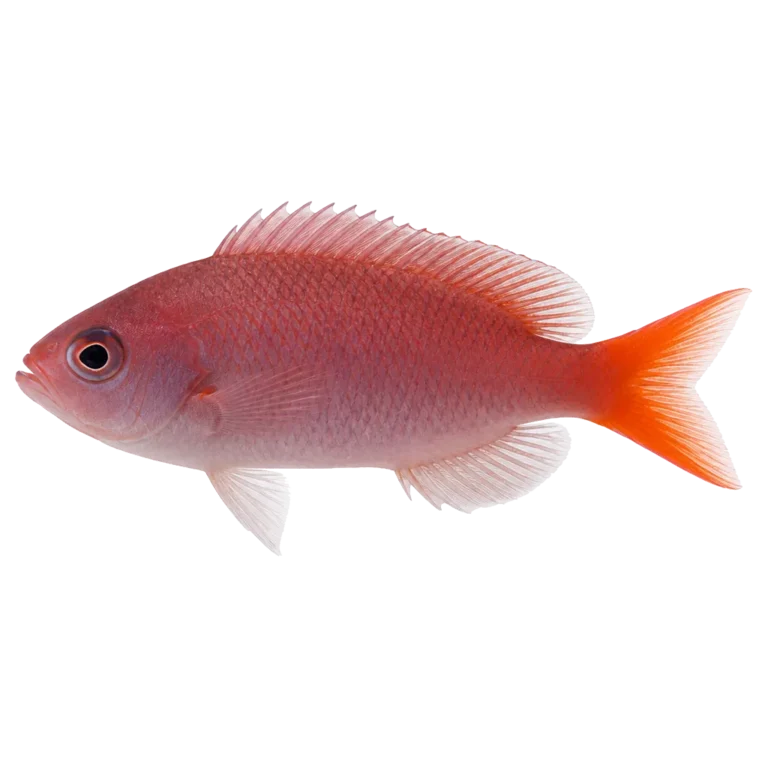
Orange-tailed Coralfish
Summary
The Orange-tailed Coralfish, Coradion calendula, is a deliberate rock-face browser rather than an open-water feeder. Expect it to spend much of the day inspecting cracks, overhangs, and hard surfaces with its long snout; persistent pecking is normal feeding behaviour, but pecking at coral tissue, clam mantles, tube worms, or decorative crustaceans makes it unsuitable for a conventional reef display.
Its close relationship to other Coradion species helps explain its aquarium behaviour: it is adapted to taking small benthic invertebrate foods, likely including sponge-associated prey. A fish that explores rockwork but ignores offered foods should be treated as a feeding concern, not assumed to be grazing successfully.
Care
Build the display around established, porous rockwork with caves, shaded recesses, and narrow feeding crevices, while leaving a clear route around the structure for steady cruising. This species repeatedly works surfaces at close range, so a bare, open fish-only layout can leave it exposed and less able to forage naturally.
Keep it in a mature fish-focused system within its listed temperature range rather than a routinely hot reef setup. Strong, boisterous water movement is less useful than accessible rock faces and calm areas where it can inspect and feed without being continually pushed into the open.
Give a new arrival time to learn the layout and feeding stations. A specimen that stays pressed into cover or only makes short dashes from shelter is often being intimidated or has not settled, especially if active food competitors occupy the same rockwork.
Feeding
Offer several small meals spread through the day, using varied frozen marine foods such as mysis, finely chopped shrimp, clam, mussel, and other crustacean-based preparations. Include a high-quality sponge-containing or mixed marine-benthic preparation when available, rather than relying on one food indefinitely.
Feed in more than one location and place some soft food into holes in a piece of rock or a shell if the fish is hesitant. This matches its crevice-searching feeding style and gives it a chance to eat before fast planktivores take suspended food.
Do not use enriched brine shrimp as the main long-term diet. It can help initiate feeding, but a fish that accepts only brine or repeatedly mouths and spits larger foods can lose condition despite appearing interested at feeding time.
Compatibility
Keep Coradion calendula singly in most aquariums. More than one Coradion should be attempted only as a compatible pair introduced together into a layout with separate foraging areas; an established individual may defend rockwork and repeatedly drive a newcomer away from food.
Choose calm community fish that do not monopolize every feeding and do not patrol the same rock faces aggressively. Avoid persistent bullies, highly competitive butterflyfish, and other forceful grazers, because this species may continue browsing while receiving too little prepared food.
Add it before the most assertive feeding competitors when possible, so it can establish a route through the rockwork and recognize feeding sites. Do not combine it with corals, ornamental shrimp or other decorative crustaceans, clams, or feather duster-type worms; the reef-safety problem is active picking, not merely accidental contact.
Good to know
Confirm the scientific name when buying. Coradion calendula was separated from the similar Orangebanded Coralfish, Coradion chrysozonus, relatively recently, so older trade names, photographs, and care information may refer to the other species. Treat the listed name as the reliable identity, especially when comparing temperature preferences or expected appearance.
The most important early warning sign is a fish that investigates every crevice but does not actually swallow prepared food. Respond by reducing feeding competition, offering small meaty items in crevices, and checking for gradual thinning behind the head rather than waiting for obvious weight loss.
Once settled, territorial behaviour toward another Coradion can become more pronounced rather than fading with time. Repeated chasing around one preferred rock section, blocked access to food, or a subordinate fish remaining hidden through meals calls for separation rather than simply adding more food.