
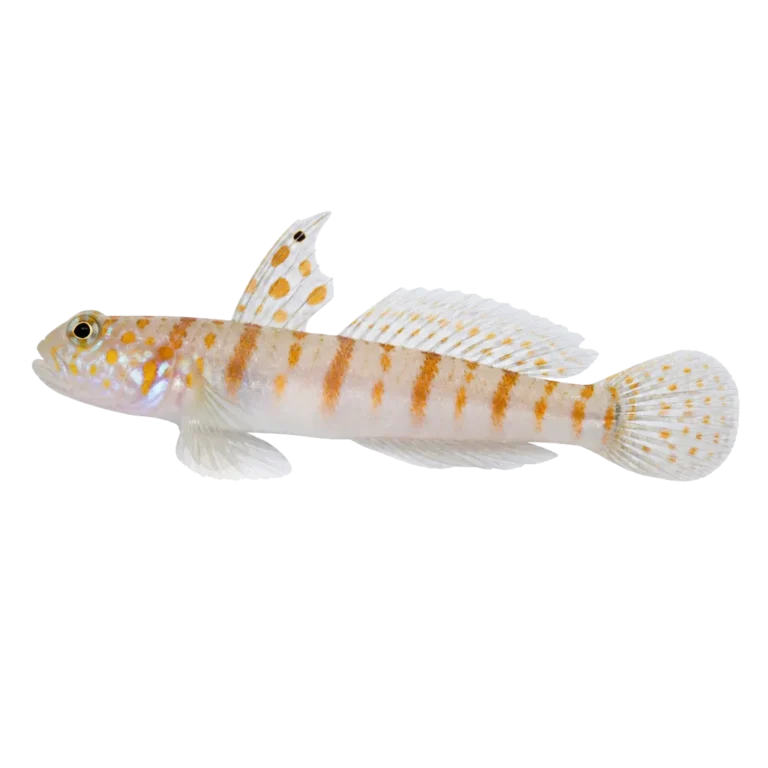
Allen’s Sand-Sifting Goby
Summary
Allen's Sand-Sifting Goby, Valenciennea alleni, is a peaceful bottom-dweller that repeatedly takes mouthfuls of sand, strains out tiny prey, and releases the cleaned sand behind or beside itself. Its natural association with silty sand near rocks explains the aquarium pattern: it needs open substrate for foraging but returns to a secure burrow or overhang when alarmed.
Treat continual sand-sifting as feeding behaviour rather than proof that the fish is well nourished. In a mature aquarium it can find some small invertebrates in the bed, but it still needs prepared foods; a goby that sifts less, develops a hollow belly, or becomes unusually reclusive should be assessed as a possible feeding problem.
Care
Build the layout around a broad area of soft sand with an accessible rock edge, rubble, or low overhang where the goby can establish a retreat. Place base rocks securely before adding sand, because excavation can shift sand away from rockwork and expose an unstable foundation.
Leave a clear bottom-level route between feeding areas and the chosen shelter. This species moves in short glides and hops over the substrate rather than swimming continuously in open water, so a crowded rockscape or strong flow that constantly scours the sand can make normal foraging difficult.
Expect it to rearrange sand around its refuge. Keep vulnerable frags, loose rubble, and low-mounted equipment out of the discharge path; recurring sand piles against one coral or pump intake are a placement issue to correct rather than a behaviour to suppress.
Feeding
Offer small, meaty foods that reach the bottom, such as finely chopped marine seafood, mysis, copepod-based foods, and quality sinking pellets. Feed several modest portions through the day when possible, concentrating food near the goby's usual foraging route so it learns to take prepared food rather than relying on the sand bed.
Do not stock it as a sand-cleaning substitute that can live solely on what it extracts from the substrate. The small prey available in a closed sand bed can be exhausted, especially when other sand-sifters are present; persistent thinness despite active sifting is the key warning sign.
Feed before faster midwater fish can strip the food from the bottom, or use a target-feeding zone near the burrow. If the goby is hesitant at first, calmer feeding periods and slowly sinking frozen foods are usually more useful than adding more competing clean-up animals.
Compatibility
Keep a single Allen's Sand-Sifting Goby unless a confirmed compatible pair is obtained together. Valenciennea gobies can form pairs, but adding another established sand-sifting goby later can turn the burrow area into a contested territory, with chasing and one fish being excluded from food.
Choose calm fish that leave the lower substrate open. Avoid large predatory fish, persistent fin-nippers, and assertive bottom-dwellers that claim caves or intercept every sinking meal; the goby may remain hidden, stop feeding openly, or lose access to its burrow.
Add it before highly territorial bottom-oriented fish whenever practical, so it can settle on a refuge and feeding route. It is reef-compatible with caution rather than fully hands-off: its sand jets can bury or repeatedly dust corals placed at sand level, so elevate susceptible corals or keep them away from its preferred working area.
Good to know
Use a tightly fitted lid or mesh cover from the day it is introduced. A startled goby can launch upward, particularly during early acclimation or when chased, and an otherwise healthy fish may disappear after a single escape attempt.
Some hiding and burrow work are normal after introduction, but prolonged concealment combined with a pinched abdomen, reduced sand-sifting, or refusal of prepared food is not. Respond by reducing feeding competition and delivering suitable food directly to the bottom before the fish loses further condition.
Once settled, it may repeatedly maintain one burrow entrance and redirect sand into the same nearby areas. This can look disruptive, but it is usually normal; relocate low corals or unsecured frags rather than repeatedly collapsing the burrow, which can keep the fish stressed and exposed.