
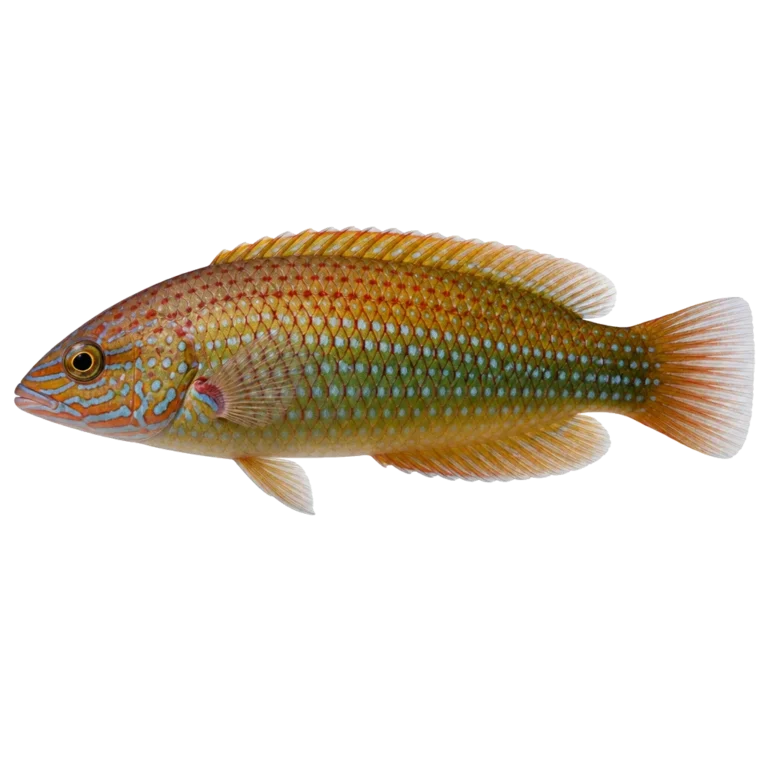
Northern Tubelip Wrasse
Summary
The Northern Tubelip Wrasse, Labropsis manabei, is a coral-polyp specialist rather than a conventional community wrasse. Its tubular mouth is adapted to picking polyps from stony corals, so repeated close inspection and nipping of SPS and other hard corals is feeding behaviour, not a problem that can be trained away.
Juveniles may pick at other fishes in a cleaner-like manner, but this does not make the species a dependable cleaner or parasite-control fish. As it matures, its reliance on coral polyps makes long-term aquarium survival and coral safety fundamentally incompatible.
Care
Do not plan a standard reef aquarium around this species. It spends much of its time working through dense coral structure, and an aquascape with accessible stony corals encourages the very feeding behaviour that damages the display.
A coral-free or soft-coral-only setup avoids direct coral loss, but it does not solve the central husbandry problem: a fish adapted to a highly specialised coral diet may decline even when it appears active and accepts substitute foods. This is best regarded as an unsuitable species for normal home aquaria rather than a difficult wrasse to acclimate.
Feeding
Do not interpret initial acceptance of mysis, finely chopped marine foods, clam, or other meaty fare as evidence that the fish is nutritionally secure. Such foods may keep it feeding in the short term, while its natural diet remains living stony-coral polyps.
If one is encountered in trade, ask to see it feed before purchase, but do not buy it on the assumption that prepared foods will replace its specialist diet. Progressive loss of body condition despite regular feeding is the key risk, and offering live corals simply transfers that failure to the coral collection.
Compatibility
Keep Labropsis manabei out of mixed stony-coral reefs: hard corals are a food source, not merely an occasional target. A tank can look peaceful while the wrasse repeatedly removes polyps from selected colonies.
There is too little practical basis for recommending pairs or groups in captivity. Wild fish occur singly or in small groups, but that does not establish a safe aquarium social arrangement; avoid adding another tubelip wrasse in the hope that they will form a pair.
If temporarily housed for observation or holding, choose calm tankmates that will not outcompete it at every feeding. This does not make a community aquarium appropriate, but it can reduce immediate feeding pressure on an already challenging specialist.
Good to know
A fish that continually patrols coral branches and takes quick, deliberate bites is behaving normally for the species. Moving it only after visible coral damage has begun may already leave it without an appropriate feeding option.
Colour and pattern can change substantially with maturity and sex, so juvenile striping should not be used as the sole basis for identification. Confirm the scientific name Labropsis manabei, especially when a dealer uses broad names such as tubelip, cleaner-like, or coral wrasse.