
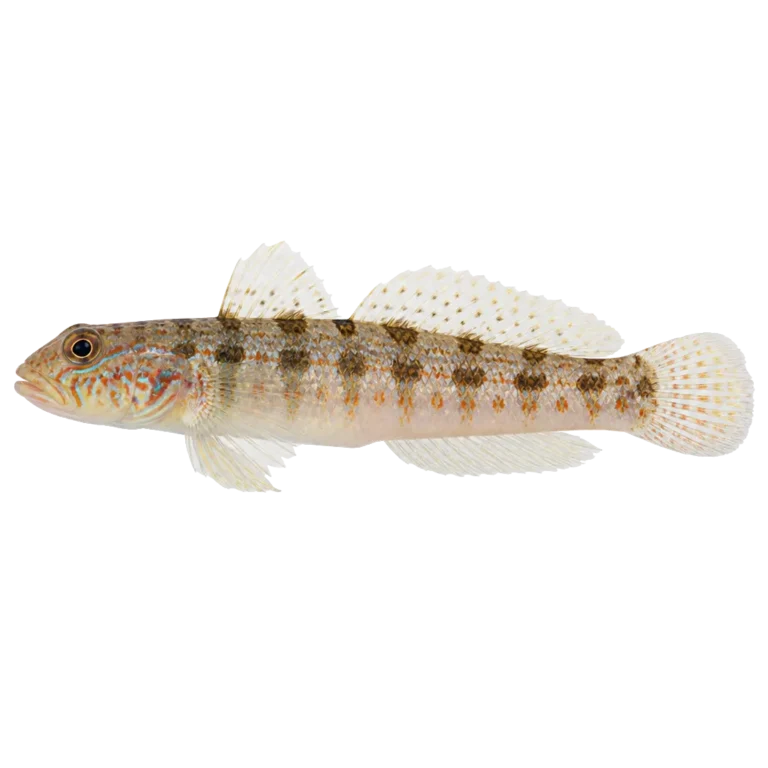
Randall’s Sandperch
Summary
Parapercis randalli is a bottom-oriented sandperch that spends much of its time resting on sand, rubble, or low rock before making short, deliberate dashes for food. Expect a watchful fish that claims a few preferred perches rather than a constant open-water swimmer.
Its natural association with reef-adjacent sandy or gravelly bottoms helps explain its aquarium behaviour: it needs clear access to the substrate and low ledges from which it can survey the tank. Treat identification by the scientific name seriously, as “Randall’s” is used for several unrelated reef fishes.
Care
Build the aquascape with open sand or fine rubble lanes beside stable rockwork, leaving several low sheltered recesses rather than packing the entire bottom with coral colonies. This lets the fish perch, retreat, and move between feeding positions without being forced into exposed open water.
Use a secure, settled aquascape and avoid placing loose frags on the substrate in its usual resting areas. A sandperch may repeatedly sit on low corals or unsecured pieces, and sudden dashes between perches can dislodge unstable items.
Keep flow broad enough to prevent detritus collecting on the bottom but avoid aiming a forceful stream directly across every resting site. A fish that constantly hugs one hidden corner or is repeatedly swept off its perch is likely being outcompeted by flow, tankmates, or both.
Feeding
Offer small, meaty marine foods that reach the bottom, such as finely chopped crustacean flesh, mysis, enriched frozen carnivore blends, and similarly sized seafood preparations. Feed deliberately near its usual perch, because it hunts close to the substrate and may miss food intercepted higher in the water column.
Split food into regular modest offerings rather than relying on occasional large meals. In a busy community, use a pipette or target-feeding tool to place food near the fish after faster planktivores have begun feeding; a sandperch that remains alert but grows thin is often losing the feeding race.
Do not rely on pods, worms, or ornamental microfauna to sustain it. It may hunt useful small crustaceans and worms, but an unexplained decline in tiny shrimp or decorative tube worms should be treated as a compatibility consequence, not evidence that the fish is fully fed.
Compatibility
Keep Parapercis randalli singly unless the aquarium is deliberately arranged for multiple bottom territories and the individuals can be introduced together. Sandperches are prone to defending preferred perches and feeding areas; a newcomer added later is the one most likely to be chased persistently.
Favour peaceful to moderately assertive fish that occupy other levels of the aquarium. Avoid pairing it with highly territorial bottom dwellers, especially other sandperches or similarly shaped perchers, because repeated contests over the substrate can leave one fish confined to hiding.
It is suitable around corals in the narrow sense that it is not a coral feeder, but it is not reliably safe with very small ornamental shrimp, feather dusters, Christmas tree worms, or tiny fishes that can be treated as prey. Add it only after deciding that those losses would be acceptable.
Good to know
Use a tightly fitted lid or screen cover. Sandperches can launch from the aquarium when startled, chased, or disturbed during introductions, and an otherwise healthy fish may be lost after a single panic jump.
Do not mistake prolonged perching for inactivity or illness. A settled individual should still watch passing movement, change perches, and make quick feeding strikes; persistent hiding, clamped fins, or refusal of food points more strongly to intimidation or poor acclimation.
Captive information for this rarely encountered species is limited, so avoid assuming that every behaviour reported for other Parapercis will occur exactly the same way. Start with conservative stocking—one fish, protected small invertebrates, and a calm bottom zone—then judge compatibility from its actual feeding and territorial behaviour.