
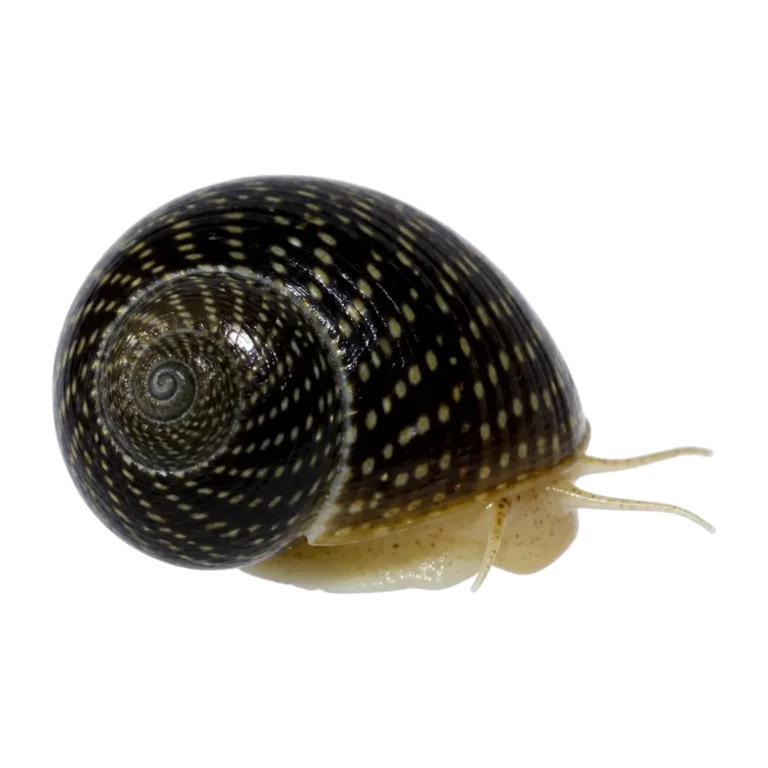
Black Margarita Snail
Summary
Margarites pupillus, sold as the Black Margarita Snail, is a cool-water Northeast Pacific grazer rather than a true tropical-reef cleanup snail. Its natural association with temperate rocky, kelp, and sheltered-bottom habitats explains the central care issue: it may eat algae in a warm reef aquarium at first, but prolonged tropical temperatures commonly lead to a shortened lifespan.
Use the scientific name when buying. “Margarita snail” is applied to several different snails in the trade, and a similar common name does not confirm that the animal is suitable for a heated reef tank.
Care
Keep this snail only in a mature, cool-water marine aquarium with established films of algae on rock and other hard surfaces. Do not add it to a conventional heated tropical reef simply because it is sold in a cleanup-crew assortment; temperature mismatch is the most realistic cause of poor survival.
Arrange accessible live rock, rockwork, and open hard surfaces for grazing. A mixed bottom of sand, rubble, and rock is suitable, but this species should not be purchased mainly to sift sand. It does not need specialized lighting or flow; the practical requirement is an established system that grows enough natural grazing film without blasting the snail from exposed surfaces.
Feeding and role
Black Margarita Snails graze diatoms, microalgae, biofilm, and some filamentous algae from hard surfaces. Supplement with dried marine algae placed on a rock when grazing is sparse, especially in clean or recently established-looking tanks; a snail that has cleared the available film can slowly starve even when the water appears healthy.
Treat one snail as a surface grazer, not a cure for a major algae outbreak. It can help keep a limited area of rock and glass from accumulating film algae, but it will not remove the underlying cause of persistent nuisance algae and should not be stocked in numbers that exceed the aquarium’s ongoing algae production.
Compatibility
This is a peaceful, coral-safe snail that normally grazes around corals rather than eating them. The larger compatibility concern is predation: snail-eating wrasses, triggerfish, puffers, and opportunistic hermit crabs can injure or kill it, so choose tankmates that will leave a small shelled grazer alone.
It does not require a mate or a group for normal behavior. Add individuals according to available grazing area and food, beginning conservatively rather than adding a large cleanup crew; excess snails compete for the same limited algae and are more likely to decline.
Good to know
Never use copper-based medication in a system containing this snail. Copper is toxic to marine snails, so move the animal before treatment or select a treatment that is confirmed safe for invertebrates.
Acclimate gradually to the destination salinity and, most importantly, do not move it from cool holding water into a warm display. If a newly introduced snail remains inactive, stops grazing, or declines after an initially normal start, review the aquarium temperature and the amount of available algae before assuming it needs more cleanup-crew companions.