
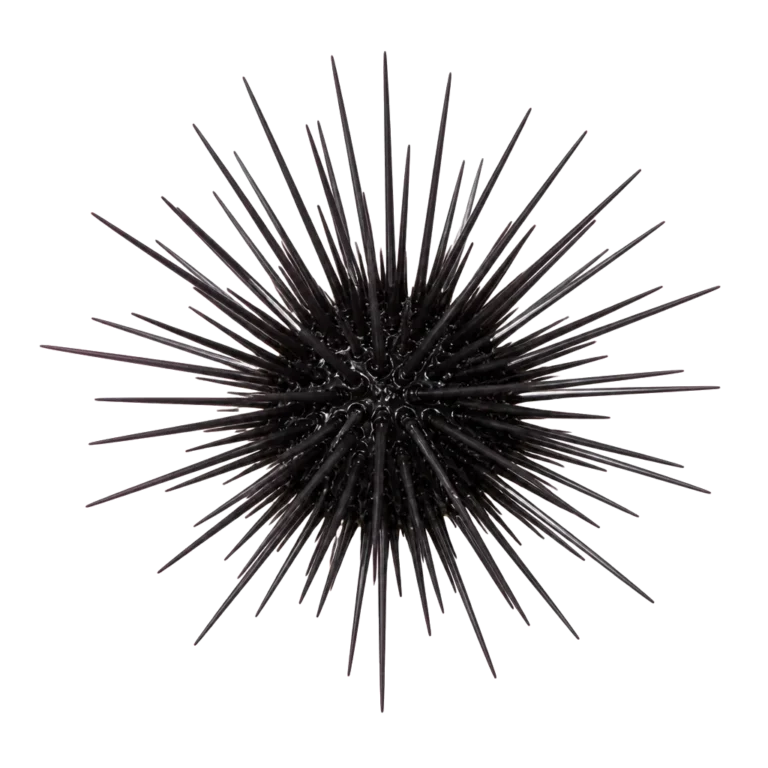
Long-spined Urchin
Summary
The Long-spined Urchin, Diadema antillarum, is a Caribbean and western Atlantic reef grazer recognized by its exceptionally long, fine black spines. It spends much of the day tucked into shaded rockwork and becomes most active after dark, so an animal that emerges to graze at night is behaving normally rather than hiding from a problem.
Care
Add it only to a mature reef with established algae-covered rock and secure crevices or overhangs. It needs hard surfaces to graze and shaded retreats for the daytime; a newly set-up, overly clean aquarium offers too little natural food and leaves it exposed to light and disturbance.
Sand is not required, but the rockwork must be firmly supported before the urchin is introduced. Its long spines can reach into narrow gaps and it can dislodge unsecured frags or lightweight rock while climbing.
Feeding and role
This is primarily a grazing herbivore that feeds heavily on turf algae and other films on hard surfaces, mostly after dark. It can make a visible reduction in algae on accessible rock, but one urchin will not correct the underlying cause of an algae outbreak or clean every surface in a reef.
Watch its available grazing area rather than assuming algae will always be sufficient. If rock becomes conspicuously clean or the urchin loses condition, offer dried marine algae or algae-based foods after lights-out, secured where it can reach them. A hungry individual may turn to coralline algae and can graze coral-associated growth or living tissue.
Compatibility
Keep it away from animals that readily eat or pick at urchins, especially triggerfish, puffers, large predatory wrasses, and large lobsters. Repeated picking can break the delicate spines and prevent the urchin from feeding normally.
Use caution around loose coral frags, zoanthid gardens, and tightly packed colonies. The urchin is not a deliberate coral predator, but its spines can topple unsecured pieces, and food scarcity raises the risk of grazing on desirable encrusting organisms or coral tissue.
Although this species may aggregate on natural reefs, add it individually in most aquariums. Several long-spined urchins require a very large, continuously productive grazing area; in an ordinary reef they can exhaust the available algae and compete with one another for food.
Good to know
Do not handle this urchin with bare hands. Its spines break easily in skin and can cause a painful puncture reaction, so plan maintenance around its position and use tools rather than reaching through it.
Never place it in a system being treated with copper, and acclimate carefully to avoid abrupt salinity change. Echinoderms are especially vulnerable to these exposures; loss of grip, drooping spines, rapid spine shedding, or failure to respond normally to shadows should be treated as urgent signs of severe stress.
Some spine loss can be followed by regrowth, but widespread or rapidly progressing spine loss is not a normal adjustment. Remove potential attackers, check for copper exposure or abrupt water changes, and avoid adding other visibly unhealthy Diadema.