
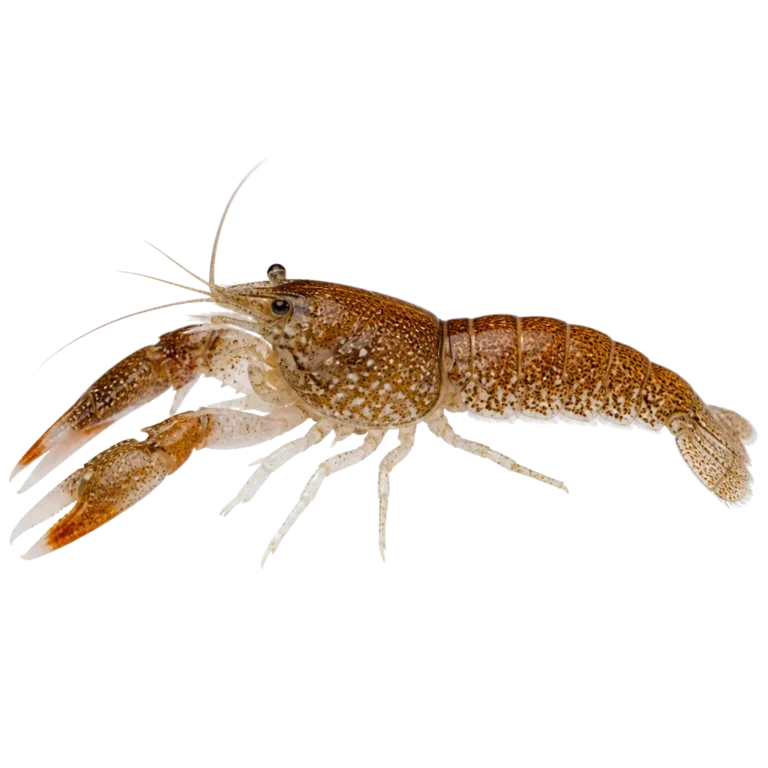
Brown Snapping Shrimp
Summary
Alpheus armatus is a western Atlantic snapping shrimp from Caribbean and Gulf reef habitats, where it lives closely associated with anemones, especially corkscrew anemones. Its enlarged snapping claw is used in defense and to subdue prey; sharp clicks are normal. Expect it to spend much of its time at the base of its host or within a sheltered sand-and-rubble retreat rather than moving openly around the aquarium.
Care
Keep Alpheus armatus with a well-established suitable anemone host rather than treating it as a general-purpose sand-dwelling pistol shrimp. Provide a sand bed adjoining stable rock, rubble, or a crevice so the shrimp can clear and maintain a protected entrance beneath the anemone. A bare-bottom layout or an anemone placed high on exposed rock does not suit its natural behavior.
Place the host where its base can remain protected from strong direct flow. The shrimp needs a refuge that holds its shape; repeated collapse of its excavated area or persistent sand burial of the anemone indicates that the site is too exposed or unstable. Lighting should be selected for the host anemone, not for the shrimp itself.
Feeding and role
Offer small portions of meaty marine foods, such as mysis, finely cut shrimp or fish flesh, and sinking crustacean pellets, delivered near its retreat or host. Do not rely on uneaten fish food: a shrimp that remains hidden may otherwise receive little food, and it is an active predator rather than a dependable scavenger.
Its digging can move sediment away from the host’s entrance and may keep that immediate refuge clear, but it is not a broad cleanup-crew substitute. It will not control algae, and small mobile invertebrates can be regarded as prey rather than cleanup partners.
Compatibility
Treat Alpheus armatus as reef-compatible with caution. It is not a coral feeder, but place loose frags and low-growing corals away from its chosen retreat because excavated sand and rubble can be shifted around the entrance. Avoid stocking ornamental small shrimp, tiny snails, tube worms, or similarly sized mobile invertebrates within its reach; they may be hunted.
Add one shrimp unless introducing a confirmed compatible pair with an appropriately spacious host refuge. Unfamiliar snapping shrimp can contest limited shelter and territory, so do not assume that multiple individuals will share an anemone. Keep predatory fishes and large crabs that can seize a shrimp away from the host area.
Good to know
Acclimate carefully to the aquarium’s salinity and avoid copper-based medications, which can be dangerous to crustaceans. A newly introduced shrimp may disappear beneath its host while it settles; that is expected, but continued failure to emerge for food warrants checking that it has an accessible retreat and is receiving targeted meals.
The shrimp is especially exposed immediately after molting. Leave its chosen shelter undisturbed and do not mistake the shed exoskeleton for a dead animal. If it loses a claw or leg, it can regenerate lost parts over later molts, though it may be less able to defend itself or feed normally until recovery.