
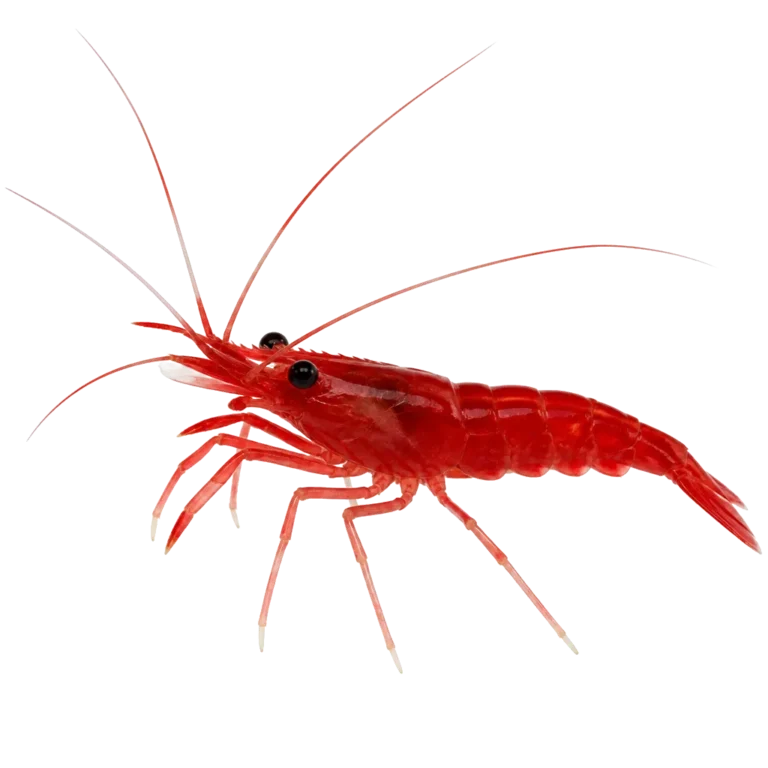
Blood Red Fire Shrimp
Summary
Lysmata debelius is a red Indo-Pacific cleaner shrimp that naturally spends much of the day in shaded reef crevices and under overhangs. In an aquarium, expect it to remain tucked into rockwork until it feels secure, often becoming more visible around feeding time or after dark. Its long white antennae may be extended from a cave as it waits for food or visiting fish.
Care
Build the aquascape with a secure, dim recess or overhang that the shrimp can claim as a daytime refuge. Normal reef lighting is suitable when that shelter is available; a brightly lit, open layout can leave it persistently hidden or stressed. It does not need a special substrate, but it benefits from rockwork that offers protected surfaces rather than an exposed perch in strong, direct flow.
Add Lysmata debelius to an established aquarium with regular feeding and a stable marine environment rather than a newly set-up system. A shrimp that stays deep in its cave is not necessarily unwell, but a new or sparsely stocked tank can fail to provide enough accessible food for a secretive scavenger.
Feeding and role
Offer a varied omnivorous diet of quality marine pellets or flakes and finely chopped or frozen meaty foods. Deliver some food close to its shelter, especially if fast fish intercept food in open water. Do not rely on cleaning visits, fish waste, or incidental leftovers as its diet; a shrimp that repeatedly rushes coral food or competes aggressively at feeding time may not be receiving enough directly.
Lysmata debelius will scavenge uneaten meaty food and may pick at dead tissue or external material from willing fish, but one shrimp is not an algae-control animal or a substitute for parasite treatment and routine maintenance. Its practical cleanup role is limited to small food scraps it can reach.
Compatibility
This shrimp is generally safe with corals, but it may climb onto corals to take offered food. Feed it separately when necessary, because repeated food theft can keep coral polyps retracted or deprive them of their meal. Keep it away from fish and invertebrates that can swallow, crush, or dismember shrimp, including large predatory fish, hawkfish, many triggerfish, and predatory crabs.
Keep a single specimen or an established compatible pair. Do not assume several unrelated Blood Red Fire Shrimp will form a peaceful group: they can defend a favored cave and harass conspecifics when space and shelter are limited. Add a pair only where the aquascape provides more than one retreat and both shrimp can feed without being displaced.
Good to know
Acclimate slowly to the aquarium’s salinity and chemistry, because sudden changes are difficult for marine crustaceans. Never expose Lysmata debelius to copper-based medications; copper is highly toxic to shrimp, so treat affected fish separately rather than medicating the display.
A shed shell is normal evidence of molting, not automatically a dead shrimp. Leave the molt in place initially, as the shrimp may consume it for minerals. The newly molted shrimp will be soft and vulnerable, so its cave must remain inaccessible to predators and bullying tankmates; unexplained disappearance immediately after a molt warrants checking for harassment rather than assuming it has simply hidden.