
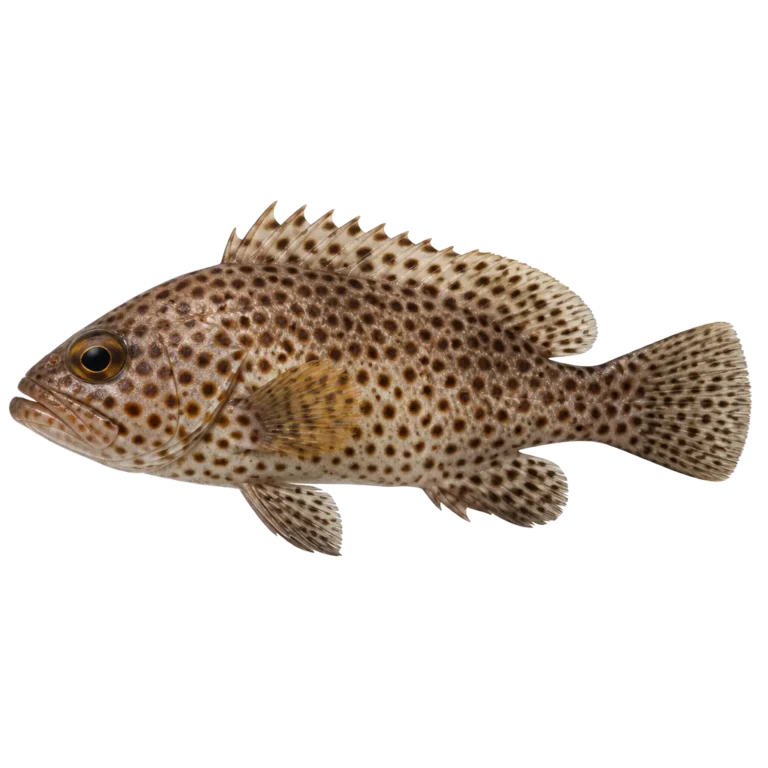
Spotted Coral Croucher
Summary
Caracanthus maculatus is a cryptic perch-and-dash predator rather than an open-water fish. It normally settles deep within a branching coral or similarly intricate structure, remains still for long periods, then makes a short strike at nearby food. A fish that is rarely seen in open water can therefore be behaving normally; one that cannot establish a protected perch often stays stressed, exposed, or difficult to feed.
Choose this species for a display that can accommodate its need to live among branches, not for constant visible activity. Its close association with branching corals explains both its sedentary behaviour and why it may bother the coral it chooses as a home.
Care
Build the aquascape around a dense, stable branching refuge with several internal routes, ideally before introducing the fish. Branching SPS skeletons, robust artificial branches, or a suitably structured rock-and-coral arrangement let it perch with cover above and beside it; a bare rockscape leaves it conspicuous and can result in persistent hiding or refusal to feed.
Place its chosen refuge where food can be delivered accurately and where water movement carries small particles past the entrance. It does best when it can hold position inside cover while watching the surrounding water, rather than having to swim continuously against a direct, high-energy jet.
Avoid repeatedly dismantling or moving the coral colony or structure it has claimed. Caracanthus maculatus may treat that site as its essential shelter, and disruption can cause it to disappear deeper into the aquascape and miss meals.
Feeding
Target-feed small marine meaty foods directly into or just upstream of its perch. Offer varied, suitably small mysis, copepods, enriched brine shrimp, finely chopped crustacean foods, and zooplankton-sized frozen preparations; the goal is for individual pieces to drift within easy striking range.
Feed small portions more than once across the day when possible, especially during the settling period. This fish is unlikely to compete in the water column, so a tankmate that rapidly strips food from the water can leave it thin even when the aquarium appears heavily fed.
Watch its body profile and its response at feeding time rather than assuming a hidden fish is eating. A croucher that stays tucked away but lunges at delivered food is usually settled; one that ignores repeated targeted offerings needs prompt intervention, often with smaller or more enticing live-enriched foods while it learns to accept frozen fare.
Do not rely on large chunks, pellets that land away from its refuge, or a single daily broadcast feeding. The practical risk is chronic underfeeding, not a lack of appetite.
Compatibility
Favour calm tankmates that do not investigate every coral branch or dominate feeding. Peaceful small planktivores and other restrained reef fish are generally better companions than fast, assertive feeders, large predators, or fishes that continually work through the same crevices.
Add Caracanthus maculatus before highly active fish whenever possible, so it can choose a refuge and learn its feeding station without being displaced. Avoid housing it with predatory fish large enough to view a small croucher as prey, and be cautious with tiny ornamental shrimp because small crustaceans are natural prey.
Keep one unless a compatible pair has been deliberately obtained and the aquarium provides separate branching refuges. Do not assume that two unrelated individuals will share one small coral head peacefully; limited shelter creates the most likely point of conflict.
Reef compatibility is conditional. The fish may irritate a branching SPS colony by occupying it, and a spawning pair may clear small areas of coral tissue for egg laying. Do not place it in a tank where even localized tissue damage to its chosen host coral is unacceptable.
Good to know
Use a rigid container rather than a net whenever practical for capture or transfer, and do not handle the fish casually. Caracanthus maculatus has venomous dorsal spines, and its habit of wedging into branches makes both netting and hand removal risky.
Do not confuse camouflage with disappearance. It may remain almost motionless and blend into its host structure for much of the day, then appear only for a brief feeding strike. Check that it is responding to targeted food before treating its reclusive behaviour as a health problem.
If it begins repeatedly shifting between refuges, hovering outside cover, or failing to strike at food, look first for a displaced shelter site or feeding pressure from tankmates. Those observable changes are more useful warning signs than how often the fish is visible.