
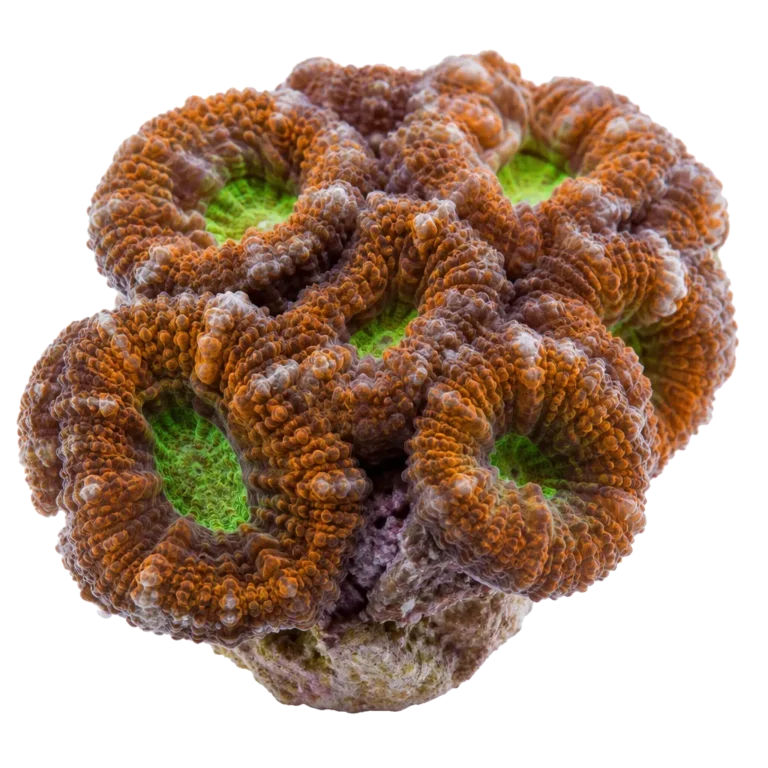
Lordhowensis Coral
Summary
Micromussa lordhowensis is a fleshy large-polyp stony coral that usually forms low, encrusting colonies with distinct, inflated oral discs. Its broad tissue and short skeleton suit sheltered reef zones rather than exposed, high-energy rockwork, which is why it is usually most reliable low in the aquarium with room to expand outward.
General care
Place Micromussa lordhowensis on the sandbed or a stable, low rock ledge where its tissue cannot rub against sharp rock or shift under it. Set the coral down by its skeleton or plug rather than squeezing the fleshy polyps; torn tissue can recede quickly, especially when it remains in contact with sand or rock.
Inspect new frags for damaged rims, exposed skeleton, and tissue peeling away from the edge. A small, clean skeletal edge is not always urgent, but progressive recession, brown jelly-like material, or a rapidly widening bare area calls for prompt isolation and improved conditions.
Lighting needs
Start this coral in a shaded or lower-light position, then move it gradually only after it stays expanded and retains its normal color for several days. Sudden increases in intensity can cause paling, persistent contraction, or tissue pulling back to reveal skeletal ridges.
Under insufficient light, color may deepen or become dull while growth and daytime inflation slow. If the colony remains comfortably inflated and colored without bleaching, it is usually receiving an appropriate amount of light.
Flow needs
Use gentle, indirect flow that makes the fleshy tissue move slightly without folding sharply or holding detritus in the valleys between polyps. Correct flow keeps the coral clean while allowing feeding tentacles to extend, often after lights dim.
Too little flow leaves settled debris, mucus, or algae around the tissue edge and can lead to localized recession. Too much flow causes repeated deflation, a pinched or windblown appearance, and tissue abrasion where the coral contacts its skeleton.
Feeding and growth
Photosynthesis supplies most of Micromussa lordhowensis' energy, but occasional target feeding is useful for newly recovering frags, colonies kept toward the lower end of available light, and aquariums with very low dissolved nutrients. Offer zooplankton-sized foods or finely chopped meaty foods after tentacles are visible; oversized pieces can be dropped or decay in the colony.
Expect a medium-paced, low spreading colony rather than a tall branching coral. New mouths commonly form around the perimeter, so leave open substrate or rock around the base instead of wedging it tightly between other corals.
Compatibility
Micromussa lordhowensis is semi-aggressive: it can extend feeding and sweeper tentacles after dark and sting corals within reach. Leave at least 10 cm3.9 in of clear space around it, increasing that buffer if you observe nighttime tentacles reaching farther or a neighbour developing pale, receding patches.
Keep it away from corals that can overgrow or repeatedly shade its expanding edge. Most reef-safe fish ignore healthy colonies, but persistent picking by angelfish, butterflyfish, or some larger wrasses can keep polyps closed; nuisance crabs and other invertebrates may also steal food and irritate exposed tissue.
Water parameters
This is moderately forgiving once established, but it responds poorly to abrupt swings in salinity, alkalinity, or temperature. Keep changes gradual, particularly after water changes or dosing adjustments, because stress often shows first as reduced inflation, fading color, or tissue recession along the colony edge.
Pay particular attention to alkalinity stability and avoid driving nutrients to near-zero for extended periods. A coral that remains shrunken despite suitable light and flow, or begins exposing skeleton from the margins, should prompt a check for recent chemistry changes before it is moved repeatedly around the tank.