
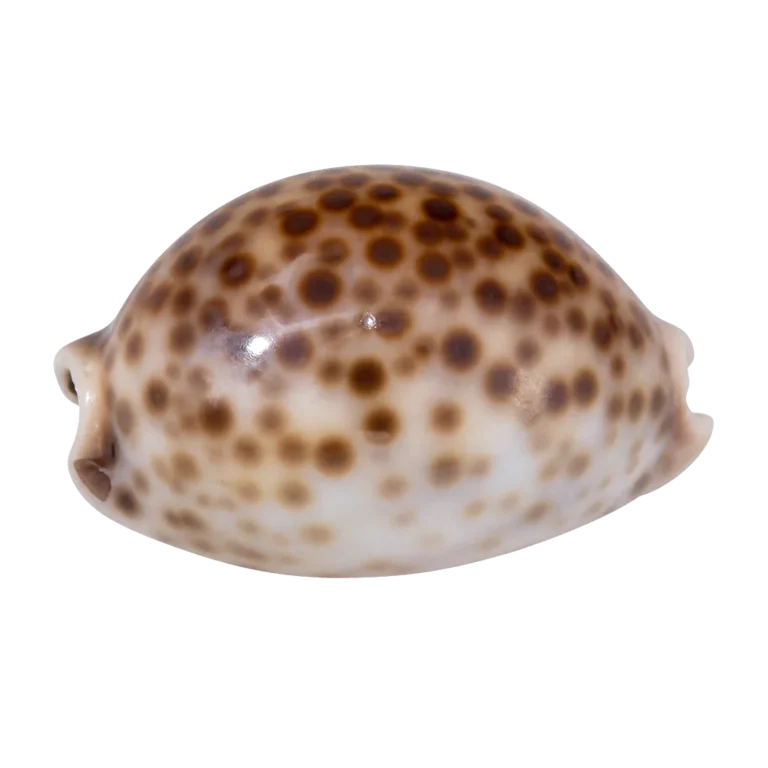
Money Cowrie
Summary
Monetaria moneta is a small, oval cowrie with a glossy shell that is often covered by a living, patterned mantle while it moves. That mantle coverage is normal, especially after dark; it helps maintain the shell surface and should not be mistaken for disease or a coral-eating feeding response.
Its natural setting is shallow Indo-Pacific reef, rock-pool, and lagoon habitat, where it shelters beneath rock or coral rubble by day and grazes exposed hard surfaces when conditions are dimmer. In an aquarium, a cowrie that remains hidden through the photoperiod but emerges to travel and graze after lights fade is behaving as expected.
Care
Provide mature live rock with shaded undersides, crevices, or stable rubble-sized shelter. A Money Cowrie needs hard, algae-bearing surfaces more than a particular sandbed type; bare-bottom systems can work if rockwork provides both grazing area and daytime cover.
Use circulation that keeps films from becoming stagnant without repeatedly blasting the animal from its route. It does not need intense lighting itself, but the aquarium should support enough natural microalgae and biofilm for grazing. Add it to an established system rather than a newly set-up, overly sterile aquarium, because a clean-looking young tank can offer too little food.
Feeding and role
Let Monetaria moneta graze film algae, microalgae, detritus, and small uneaten food particles on rock and glass. If its grazing surfaces are sparse, offer dried marine algae or a herbivore-focused algae food after lights dim, placing it where the cowrie can reach it and removing leftovers that are not eaten.
Treat one cowrie as a maintenance grazer, not an algae-removal solution. It can reduce light films and use incidental leftovers, but it will not reliably clear a major algae outbreak or replace manual removal and correction of the cause. A cowrie that repeatedly searches the same clean areas or becomes inactive despite safe housing may need more available algae food.
Compatibility
Monetaria moneta is generally safe with corals, but observe any persistent grazing on encrusting sponge growth. Secure loose frags, as a roaming cowrie can dislodge poorly attached pieces even though it is not targeting the coral tissue.
Keep it away from animals that eat snails or can break or pick at its shell, including pufferfish, triggerfish, large predatory wrasses, and predatory crabs. Keep one as the default: Money Cowries do not require companions, and adding several to a small food base creates direct competition for the same films and algae.
Good to know
Acclimate slowly to the receiving aquarium's salinity and chemistry, then place the cowrie upright on rockwork near cover. Sudden changes can leave a snail withdrawn and unable to resume normal grazing; after introduction, confirm that it eventually attaches and moves rather than remaining sealed and motionless.
Do not use copper-based medications in an aquarium containing Monetaria moneta. As with other marine snails, copper exposure can be lethal. A mantle extended over the shell is normal, but a persistently withdrawn animal, failure to attach, or an overturned cowrie that cannot recover should prompt an immediate check for predation, unsuitable flow, and food availability.