
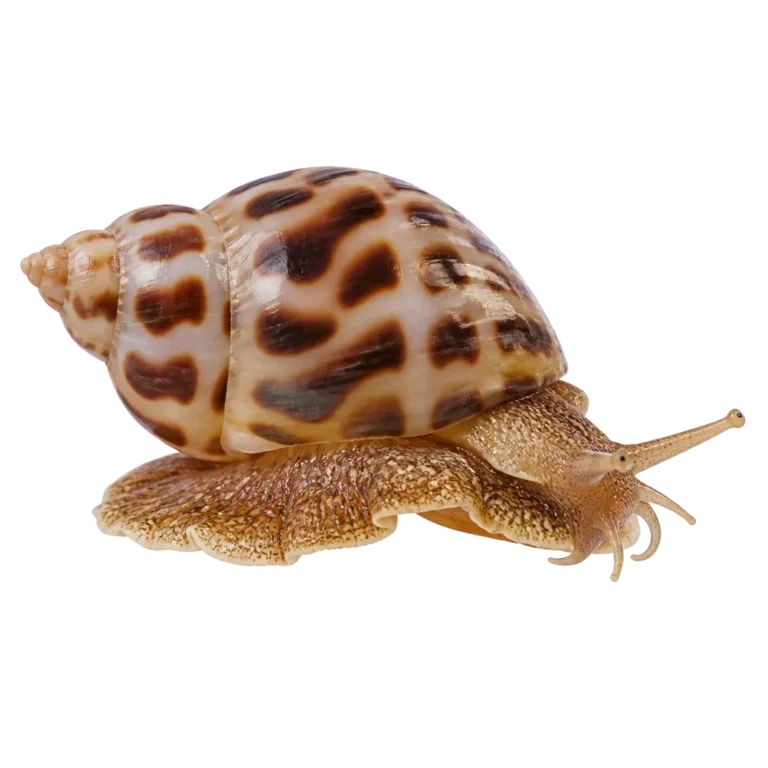
Babylon Snail
Summary
Babylonia spirata is a carnivorous scavenging sea snail adapted to soft marine bottoms. Fine sand or sand-mud substrate lets it bury and forage naturally, so a snail that spends much of the day concealed and emerges when food is available is usually behaving normally rather than disappearing or failing to settle.
Care
Use an open area of fine, loose sand that the snail can enter easily. Avoid packing the bed with coarse rubble or cementing every area with rock, because an exposed snail deprived of workable substrate cannot carry out its normal burrowing behaviour.
A mature aquarium is helpful because it offers more natural food residues and a settled sand bed, but maturity does not replace direct feeding. Lighting is not a care requirement; choose it for the corals and other livestock rather than for the snail.
Feeding and role
Offer marine meaty foods directly, such as chopped clam, mussel, shrimp, fish, or sinking carnivore pellets. Place a modest portion on the sand near the snail and remove food that remains uneaten, especially if the aquarium is lightly stocked; a clean-looking tank may not provide enough carrion to sustain it.
This is not an algae-eating cleanup snail. It can consume uneaten meaty food and carrion from the substrate, but one animal will not meaningfully manage a system-wide detritus problem. Its scavenging is useful only when it is fed without allowing leftovers to accumulate.
Compatibility
Treat Babylonia spirata as reef-compatible with caution. It usually leaves corals alone, but smaller snails, bivalves, and other vulnerable bottom-dwelling invertebrates can be prey rather than tankmates. Do not add it to a cleanup crew built around small mollusks or keep it with ornamental clams and similar bivalves.
Avoid fish or crustaceans capable of crushing or extracting snails from their shells, including dedicated mollusk-eaters. This species does not need a group; begin with an individual, then only consider additional specimens when each can be deliberately fed and the aquarium contains no livestock that could be treated as prey.
Good to know
Acclimate carefully to the aquarium’s salinity and temperature, as rapid change can stress marine snails. Never expose it to copper-based medication; copper is toxic to gastropods and can make a treated display unsafe for this species.
Do not assume a buried snail has died. Check for a response only if it has failed to emerge for feeding over an extended period or if there is a foul smell. Conversely, a snail that repeatedly searches exposed surfaces while ignoring offered food may not be finding suitable substrate or may be declining, rather than simply performing cleanup work.