
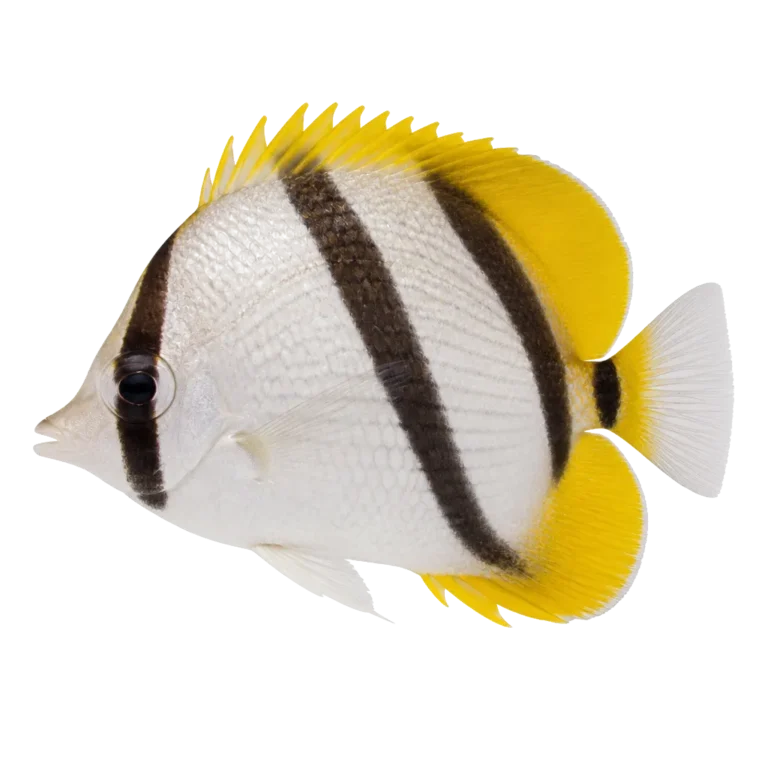
Chevron Butterflyfish
Summary
Chaetodon trifascialis is a highly specialized coral-feeding butterflyfish, not a generalist butterflyfish that happens to nip corals. It naturally patrols a defended feeding area around branching Acropora, repeatedly picking mucus and polyps; in an aquarium, that instinct shows as persistent inspection and feeding attempts on stony corals rather than occasional exploratory nipping.
Treat a specimen that does not already eat suitable substitute foods with extreme caution. A fish may look alert and actively forage while steadily losing condition because its normal feeding behaviour is not being met. The practical warning signs are a narrowing body behind the head, reduced interest at feeding time, and increasingly relentless picking at corals or rockwork.
Care
Plan for an established, coral-free fish system with broad, unobstructed swimming routes along the rockwork. This fish patrols rather than hovering in one small shelter, so a cramped, densely blocked layout can intensify territorial pacing and conflict with other fishes that use the same reef face.
Build several separated rock formations, overhangs, and visual breaks instead of one continuous wall. The fish should be able to withdraw from attention and then resume a regular patrol; repeated glass-running, hiding for long periods, or guarding one small area against every passing fish indicates that the layout or stocking mix is not working.
Branching rock structure can give a juvenile or newly introduced fish a sense of cover, but it is not a nutritional replacement for live Acropora. Do not mistake active picking at rock or dead coral skeletons for proof that the fish is feeding adequately.
Feeding
Only acquire Chaetodon trifascialis after personally confirming that it repeatedly takes prepared foods in the seller's system. Offer small, frequent portions of high-quality marine fare such as finely chopped clam, mussel, shrimp, and other meaty crustacean-based foods, with a substantial proportion delivered where the fish can pick deliberately rather than chase food in open water.
Use a feeding station or press a suitable marine gel food onto a clean hard surface if it improves the fish's willingness to graze. This can match its picking behaviour better than a brief broadcast feed, but it does not make the species reliably adapted to captivity. Monitor body profile and feeding response daily, because acceptance of a few bites is not the same as maintaining weight.
Keep fast, food-dominant planktivores and boisterous feeders out of its feeding lane. If the butterflyfish hangs back until food is gone, isolate the feeding area or reassess the tankmates immediately; this species cannot safely miss repeated meals while it is being transitioned onto substitutes.
Heavy feeding can quickly create excess waste. Remove uneaten food rather than repeatedly increasing portions when the fish refuses them, then address the food type, presentation, or competition causing the refusal.
Compatibility
Keep this species away from Acropora and other stony-coral displays. The reef-safety problem is not an occasional compatibility exception: consuming coral polyps and mucus is central to the biology of Chaetodon trifascialis, so even a well-fed individual remains a direct risk to coral colonies.
A single specimen is the lowest-risk choice. This species defends feeding space from its own kind and from other coral-feeding butterflyfishes; adding an unrelated second Chevron Butterflyfish can lead to sustained chasing, blocked access to food, and decline of the subordinate fish.
Do not mix it with other butterflyfish, especially similarly shaped or coral-oriented species. Favour calm, non-competitive fishes that leave the butterflyfish room to patrol and feed, and introduce Chaetodon trifascialis before strongly territorial reef-face fishes have claimed the entire aquascape.
Good to know
Territorial behaviour can become much stronger after the fish settles in. Short initial displays may turn into repeated pursuit once it chooses a patrol route, so do not assume early tolerance means a long-term mix is safe. A fish that is being excluded may stay pale, remain near the surface or corners, and arrive late to food.
Wild social behaviour includes male-held areas overlapping with females, but this does not make casual group keeping appropriate in an aquarium. Sexing and pairing are not dependable stocking tools for most hobbyists; an unverified pair should be treated as a likely territorial conflict rather than a breeding opportunity.
The main failure mode is delayed starvation rather than an immediate crash. A Chevron Butterflyfish can remain active and appear normal while its body mass declines, so a clearly feeding specimen with a full, stable body profile is far more important than a fish that merely pecks at offered food.