
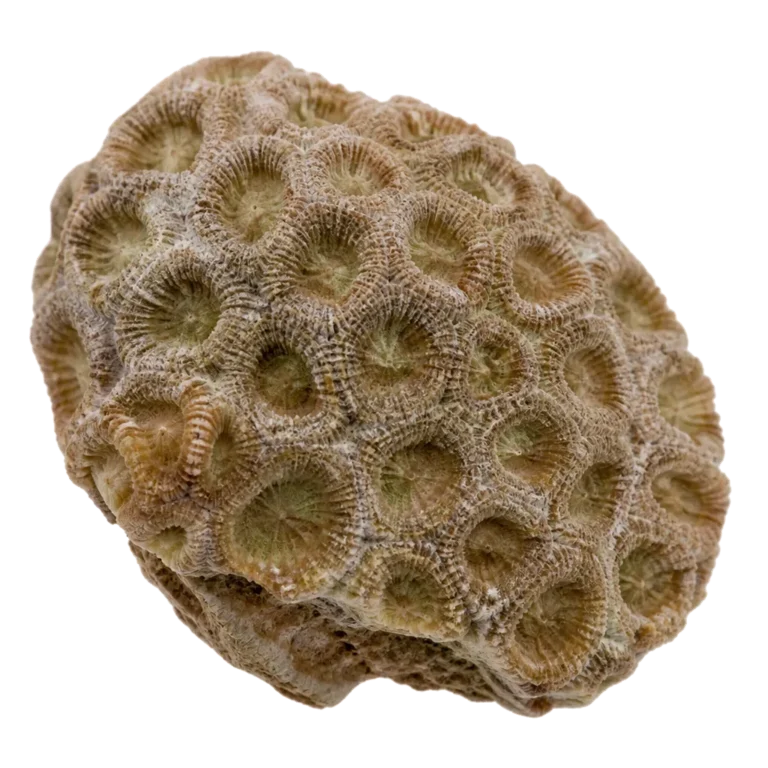
Caulastraea Coral
Summary
Caulastraea sp., often sold as candy cane or trumpet coral, is a branching LPS coral with separate, fleshy round polyps atop tubular skeletons. Species within the genus vary, but this growth form makes a colony easier to place than an encrusting coral while also leaving each head exposed to accidental knocks.
Caulastraea occurs across Indo-Pacific reefs. In an aquarium, its broad, inflated daytime polyps are a useful health cue: a settled colony should usually look rounded and full rather than remaining tightly withdrawn for days.
General care
Place Caulastraea sp. on stable rockwork in the lower to middle area of the reef, where it can expand without rubbing against the glass, rock, or neighbouring colonies. Secure the frag plug or bare skeleton firmly; a loose colony can topple and split or abrade its expanded tissue.
Handle only the bare skeleton or plug, never squeeze the fleshy heads. Brief retraction during transfer is normal, but torn tissue at the rim of a corallite can lead to recession, so keep exposed heads from striking hard surfaces during dipping, acclimation, and aquascaping.
Lighting needs
Begin a new Caulastraea sp. toward the dimmer end of its suitable placement and increase exposure gradually after it has resumed regular daytime expansion. This is especially important when moving a colony from shop lighting or a different LED spectrum.
At suitable light, the polyps remain inflated and retain their normal colour. Persistent weak expansion, dulling, and very slow budding after the coral has settled can indicate insufficient light; move it upward only in small steps. Pale tissue, bleaching, or repeated daytime contraction soon after an increase points to excessive light, so reduce exposure or return the coral to its previous position.
Flow needs
Use indirect, gentle-to-moderate, variable flow that keeps the polyp tissue softly moving and clears uneaten food and detritus from between heads. The coral should stay rounded and able to extend feeding tentacles, not be held rigidly in one direction.
If flow is too weak, debris may collect around the bases and heads may look persistently dirty or fail to open fully. If flow is too strong or direct, polyps stay pinched, bend sharply, or repeatedly retract; redirect the pump rather than simply moving the colony into a dead spot.
Feeding and growth
Photosynthesis supplies much of this coral’s energy, but target feeding is useful for a newly stressed colony, a nutrient-lean system, or when faster growth is wanted. Offer finely chopped mysis or similarly small zooplankton-sized foods when feeding tentacles are visible, and feed individual mouths lightly so food is captured rather than left to decay on the colony.
Caulastraea sp. develops a branching, phaceloid clump as new heads bud from its stalks. Leave open room above and around the colony for those branches and for access when separating or repositioning it; a compact frag can become a wider cluster rather than remaining confined to its original plug.
Compatibility
Caulastraea sp. is semi-aggressive and can extend feeding or sweeper tentacles that sting nearby corals, particularly after dark. Give it at least 5 cm2 in of clear space from other sessile invertebrates, then increase that gap if night-time tentacles reach farther or a neighbour shows localized tissue damage.
Keep it away from coral-nipping fish such as many butterflyfish, angelfish, and filefish, as repeated picking can prevent full expansion and damage the fleshy polyp rims. Shrimp and other opportunistic scavengers may steal target-fed food; feed after dark or shield the colony briefly if food is repeatedly pulled from the mouths.
Water parameters
Caulastraea sp. is generally more forgiving than many small-polyp stony corals once established in a mature reef, but it responds poorly to abrupt swings rather than to a single slightly imperfect reading. Keep alkalinity and salinity especially consistent, because sudden changes can cause prolonged deflation and tissue recession around individual heads.
Watch the colony after maintenance, dosing adjustments, or a salinity correction. A head that stays withdrawn while neighbouring heads remain open, develops exposed skeleton around its edge, or loses tissue should be treated as an early warning to check for a rapid chemistry change, physical injury, detritus buildup, or excessive flow.